It’s Okay to Press Pause

At daybreak he departed and went into a deserted place. And the crowds were looking for him; and when they reached him, they wanted to prevent him from leaving them.” – Luke 4:42

At daybreak the next morning, Jesus goes to a solitary place. This is the regular practice of Jesus, highlighted all through the Gospel accounts. I find it fascinating that Jesus does not engage the crowds constantly. There were always needs around him. But he is not in continuous interaction with either his own inner circle or with the masses of people. At significant moments in his life, he withdraws from the press and pull of other people, in order to have time alone in silence and solitude with the Father.

This is an essential part of who he is and an essential part of his life-rhythm. This is his time for prayer, his time for meditation, his time to reflect on the trajectory of his ministry, his time to reconnect in a tangible way with the Father. In these moments, he is reminded of his center, the connection to his Father that anchors his life.

When Jesus, in other places, says “I only do what I see the Father doing” and “I only say what I hear the Father saying,” these are the moments he is referring to. It is only in this kind of silence and solitude that you can truly hear the still, small voice of God. It is only in these moments of meditation and spiritual reflection that you can see what God is doing in the world and then integrate that into your own life.

These moments of pause, when he is not surrounded by people, are essential for Jesus as he steps more fully into his mission and ministry.

The ‘Gospel’: It Means More Than You Think

“Truly I tell you,” he continued, “no prophet is accepted in his hometown. I assure you that there were many widows in Israel in Elijah’s time, when the sky was shut for three and a half years and there was a severe famine throughout the land. Yet Elijah was not sent to any of them, but to a widow in Zarephath in the region of Sidon. And there were many in Israel with leprosy in the time of Elisha the prophet, yet not one of them was cleansed—only Naaman the Syrian.” (Lk. 4:24-27, NIV)

Jesus mentions two stories from the Old Testament that represented an unpopular strand of Jewish tradition. Jews believed that they were the recipients of an exclusive choosing; that is, they believed that God’s choice of Abraham and Sarah, God’s choice of Israel, meant that God did NOT choose anyone else.

Story of the widow of Zarapheth in Sidon is significant that the Hebrew prophet Elijah is sent to a foreigner . . . and perhaps more radical to the audience, that he is sent to a woman.

Elisha is sent to heal the Syrian commander, Naaman, of leprosy. The reign of God extends beyond the borders of Israel, even into the land of Israel’s enemies, the Syrians.

Elijah and Elisha were Hebrew prophets, both Jews who were part of the chosen people. Yet in these two Old Testament stories, it is clear that the chosen people were chosen not to hoard the blessings of God, but to bring the benefits of the one God to all people. The focus is not on Israel and what Israel can receive from God, but on what they can offer to others…how they are to embody the blessing of Yahweh to all the peoples of the world. Elijah and Elisha, two prophets who were committed to God’s covenant with Israel, knew this.

Jesus’ words suggest that the people of Nazareth must come to realize this, also. Their own sense of what it means to be the people of God needs to be transformed. They are not God’s children in order to receive all of God’s blessings merely for themselves. They are God’s children in order to bring blessing to all people of the world. To be chosen by God means to be sent to others…even those outside the circle of inclusion you have drawn.

And this good news is accepted and embraced by the church, right? No. Not even close. The Nazarenes’ appraisal of Jesus changes with the telling of these two stories. They move from amazement to becoming so enraged that they drive him out of town and then seek to kill Jesus.

If we are going to follow Jesus, we have to come to a fundamental understanding of Jesus’ mission as the Son of God. We must also come to a fundamental understanding of God’s heart for the entire world. Because Jesus came for the entire world, as those who follow the path of Jesus, we are called to bring love, peace, blessing, and salvation (wholeness) to the entire world.

A Strange Game: The Only Winning Move is Not to Play

Greetings Professor Falken…

When we follow Jesus, our God-given identity unfolds within us and animates us with purpose and intention for living our days.

The evil one’s strategy with Jesus in the wilderness intentionally follows the baptism, where in prayer Jesus heard the voice addressing him from the heavens: “You are my beloved Son, in whom I am well pleased” (Lk. 3:22).

The temptations in the wilderness focus on Jesus’ identity. As proposed by Satan, they attempt to lure Jesus with wrong ways of framing what it means for him to be the Son of God. In both Luke’s account and Matthew’s Gospel, two of the three testings begin, “If you are the Son of God…” (Lk. 4:3, 9, NIV). The conditional “if”…Satan’s way of trying to move Jesus away from his core identity, from the center of his personhood.

Philosophy calls what is happening here creating a ‘false dilemma’. It is a near relative of a false dichotomy. A false dilemma is defined as an “informal fallacy based on a premise that erroneously limits what options are available.” This kind of false dilemma says, “If A is true, then B must be true” or “If A is true, then B must happen in this way.” Options are limited to a single course of action or a single result.

Most all of us think and relate to others in this – devilish? – way everyday. We live with this kind of presumptuous thinking that seeks to control and manipulate others into a particular way of acting and being in the world.
• “If you are my friend, you will do this for me.”
• “If you really are a Christian, then you will believe this or that.”
• “If you want to see social change, then you need to align yourself with this or that movement.”
• “If you are a REAL Republican, you’ll vote this way . . . or take this stand on issues.”
• “If you are a REAL Democrat, then these things must be important to you.”

All of this “if-then” thinking limits options…says that there is only one, straight-line way to express your sense of personhood…and tries to force persons into a kind of logic that is false from the beginning. And as I said, those who think and act in this way may not intend it, but they are behaving in a very “devilish” way…for if you do not respond in the way they feel is appropriate in their original “A” statement, then you must not be “A.” (the word for devil in the New Testament means ‘one who divides’)

In the case of Jesus being tested by the evil one in the wilderness, he is told, “If you are the Son of God, then you will act in certain ways.” The evil one tries to limit his options and choices. As far as the devil is concerned, there are no other ways to be the Son of God. And if Jesus chooses other ways to be the Son of God, then the devil can say “see, Jesus is not truly the Son of God.”

The good news is Jesus doesn’t take the bait, and neither should you. You will be confronted with many false dilemmas in our world. Some will be about faith, others politics, and others more personal issues. As long as you are grounded in your divine identity and willing to look deeper beyond the surface of the false dilemmas presented, you will will discover the kind of faith that truly transforms us at every level of life.

Affirming Your True Identity

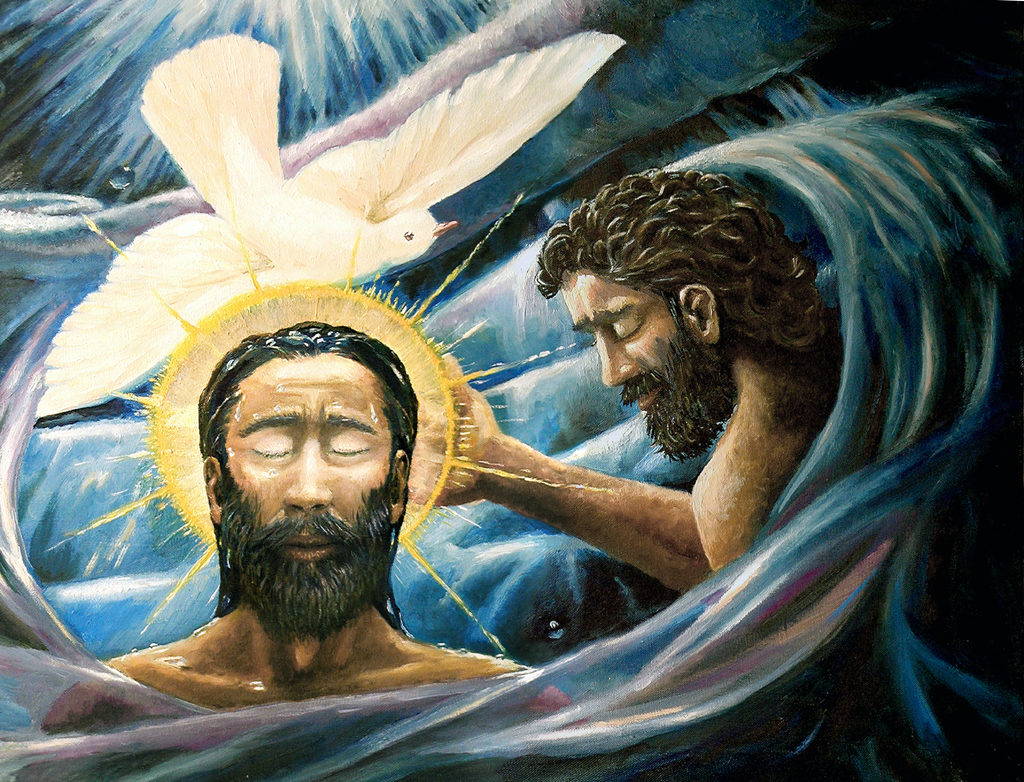
The Baptism of Jesus

At his baptism, as Jesus was praying, the heavens opened and the Holy Spirit descended on his in bodily form like a dove. And a voice came from heaven: “You are my Son, whom I love; with you I am well pleased.”
 
Jesus’ identity was often challenged throughout his life. In fact, he will move directly from baptism into the wilderness for 40 days of fasting and to be tempted and tested in the desert by the adversary, satan. It is no coincidence that two of the three temptations begin, “IF you are the Son of God,…”
 
Years ago, Maya Lin, the designer of the Vietnam Memorial in Washington, D.C., was interviewed by a TV reporter. The interviewer noted that her remarkable work seemed to have such a strong grip on people . . . that it moved those who visited the memorial with a deeply emotional experience. The reporter asked Maya Lin about why that might be so. She replied, “It’s the names. The names are the memorial. No edifice or structure can bring people to mind as powerfully as their names.”
 
It is important to be named . . . to have a name . . . to know your name . . . to have your deepest, most authentic identity affirmed. Jesus heard that from his Father. We must hear that from God as well in our baptismal identity. “You are my son/daughter, whom I love; with you I am well pleased.”
 
The world and society around us are seeking to deconstruct us everyday and rebuild us into something we were not created to be. I believe that a major part of the Christian spiritual life is about hearing again the name that is foundational to the personhood each of us are invited to live into. We forget who we are. We forget what is fundamental to our personhood. We forget the basic nature of our very DNA. In some sense, Christian spirituality is about remembering, then living more fully into our God-given, God-ordained identity.

What Am I Afraid Of? Learning to Release Anger

What does it feel like to live afraid? Afraid of the world? Afraid of people? Afraid of the pandemic? Afraid of politics? Afraid of conflict over anything and everything? What does it feel like to lose friendships that are special to you? What does it feel like to feel as if you’ve failed at the very thing God called you to do in your life?

I recently asked a wise friend, “Why am I angry all the time?”  His response shocked me. He said, “Anger and fear cannot share the same space. None of us like to be afraid and so we fill those spaces with anger – it pushes the fear away.”  He then asked, “John, what are you afraid of?”

Unfortunately, there are a lot of answers to that question. If I want to resist anger and not let it take up so much space in me, I must confront the very things I am afraid of. I can honestly say (whether I am blind to this or not) that I have never lived my life afraid. But over the past 20 months, there have been many things that I fear. I am afraid of losing friendships. I am afraid of losing church members. I am afraid of being ill-equipped. I am afraid of failing.  But here is the rub: It is true that if I lose these things, it will hurt deeply. But loss and pain are not the end of life in Christ. As a matter of fact, Christ taught us that loss, suffering, pain, and even death are not the end. I may be afraid, but the loss of these things does not mean the end of life in Jesus.

So, I am giving some space to my fears…not so they have power over me or so that they debilitate me…but so that I can remember that I can be afraid, and trust that God’s got this. I’m ready to be done with anger.  Maybe you are as well. But we must first acknowledge we are afraid.  I’m finding that as I do this, I can hear God’s words about fear in a new way.

“Even though I walk through the valley of the shadow of death, I will fear no evil, for you are with me; your rod and your staff, they comfort me.” – Psalm 23:4

“The Lord is my light and my salvation; whom shall I fear? The Lord is the stronghold of my life; of whom shall I be afraid?” – Psalm 27:1

“God is our refuge and strength, a very present help in trouble. Therefore we will not fear though the earth gives way, though the mountains be moved into the heart of the sea, though its waters roar and foam, though the mountains tremble at its swelling.” – Psalm 46:1-3

“Peace I leave with you; my peace I give to you. Not as the world gives do I give to you. Let not your hearts be troubled, neither let them be afraid.” – Luke 14:27

“He will cover you with his pinions, and under his wings you will find refuge; his faithfulness is a shield and buckler. You will not fear the terror of the night, nor the arrow that flies by day.” – Psalm 91:4-5

Pandemic, Fog of War, and Learning Horizons

The “fog of war” is the uncertainty in situational awareness experienced by participants in military operations. Carl von Clausewitz is credited with coining the term although he never actually used it. Once a battle begins, information becomes confusing and even distorted. We can’t see things accurately due to noise, smoke, and confusion in action. Interestingly, while Clausewitz saw the fog of war as an impediment to overcome, Korean-era fighter pilot, Colonel John Boyd, realized it could be used to advantage leveraged correctly.

I stayed away from blogging since the pandemic began. Early on, I wasn’t entirely sure why. But as we begin to see the daylight on the other side of the pandemic, I get it. Pandemic life was and is deeply uncertain for everyone. In my almost 30 years of experience in ministry, I’ve learned to pierce the “fog of war” in many situations of life – personal and community conflict, denominational upheaval, political tensions, racial struggles, natural disasters, etc. But a pandemic is a new one for all of us. So, I did what many of you did and what many pastors did…we moved from foxhole to foxhole tending to the deep trauma in people’s lives. We were learning in real time – trial and error everyday. Everything was stripped away in an instant. We’ve never seen anything like it in our lifetimes, and I hope once we are finished, we will never see it again.

Peter Senge, in The Fifth Discipline: The Art and Practice of The Learning Organization, wrote, “powerful learning comes from direct experience. We learn eating, crawling, walking, and communicating through direct trial and error – through taking an action and seeing the consequences of that action; then taking a new and different action. But what happens when we can no longer observe the consequences of our actions? What happens if the primary consequences of our actions are in the distant future or in a distant part of a larger system within which we operate? We each have a “learning horizon”, a breadth of vision in time and space within which we assess our effectiveness. When our actions have consequences beyond our learning horizon, it becomes impossible to learn from direct experience.” In lay terms…when the learning horizon is too far away, you have no way to tell how you actions affect you, those around you, and the world you live in. You could be doing great harm, but you have no way to know that it is from your action because you can’t see the consequences of you words and behaviors. (Social media is a good example of this.)

I believe this is where we are as a society and as the church in the United States. For some of us, the pandemic caused us to shut down and hide away. Others attempted to penetrate the fog of the pandemic with certainty rooted in our uncertainty. I mean, if we could be certain enough about this thing, we can defeat it, right? Our learning horizon moved far, far away and that led us to behave badly.

What is the solution? Simon Sinek refined something called the “Golden Circle”. Three circles inside each other. The largest circle is your What – your title, what you do, what you offer, issues in society…it is rooted in everyday actions, words, and practices. The second circle is your How – the way you engage in your What…how you speak, how you engage, how you treat others. The third and smallest circle – the bullseye – is your Why – your central purpose, your central belief system.

It feels to me that Christians in America have been spending too much time focusing on the What with little consideration of the How and very little thought given to the Why. American Christians believe we can “win the day” if we win the What. This thinking disconnects us from the Why and the How. Don’t get me wrong…the What is important, but it is not more important than the How and definitely not more important than the Why.

In John 15, Jesus said, “As the Father has loved me, so I have loved you; abide in my love…this is my commandment, that you love one another as I have loved you.”

In Galatians 5:22-23, Paul wrote, “…the fruit of the Spirit is love, joy, peace, forbearance, kindness, goodness, faithfulness, gentleness, and self-control. Against such things there is no law.

And finally, in Mark 1, Jesus said, “the time is fulfilled, and the kingdom of God is at hand; repent and believe in the gospel.

The fog of war will always lead to uncertainty if we make the What of life the most important part of our Christian faith. But like Col. Boyd, if we want to reduce the distance of our learning horizon and use the fog of war to our advantage, we will need to spend much more time on our How and our Why, and far less time on our Whats.

A Vision of Unity from Africa

I have been in a lot of meetings over the past several years regarding the impasse in the United Methodist Church over human sexuality.  I have always believed in the unity of the church and fought for it.  I also realized that we were doing more harm by not figuring out some sort of space in the church over this issue…whether that be separation or even a split.  There are people on both sides of this debate who feel they cannot remain in the United Methodist Church.  The recent Protocol for Reconciliation and Grace Through Separation would provide a framework for those who feel they cannot remain in the United Methodist Church over this issue by birthing new denominations of Methodism.  I lament the separation and the negative impact it will have on our mission, but we need to get to a place where we can focus on the central reason we exist as the church.

The Preamble of the United Methodist Church’s Constitution reads, “The church is a community of all true believers under the Lordship of Christ. It is the redeemed and redeeming fellowship in which the Word of God is preached by persons divinely called, and the sacraments are duly administered according to Christ’s own appointment. Under the discipline of the Holy Spirit the church seeks to provide for the maintenance of worship, the edification of believers, and the redemption of the world. The church of Jesus Christ exists in and for the world, and its very dividedness is a hindrance to its mission in that world.”

Over the past year, I have been in conversation with some African Bishops in the United Methodist Church.  A few weeks ago, Bishop John Yambasu (Sierra Leone) sent me the following email, which he gave me permission to share:

“At this time in our long and confusing journey, I believe continued dialogue is a major step in attaining understanding and moving forward to a peaceful way of resolving our current unresolved debate on human sexuality. And I thank you so much for sharing your perspectives on the future of the UMC. For us in Africa and the Central Conferences, we believe the earlier we get this debate behind us the better for the work of mission that God has called us to. Each day, millions of people around the world are dying of hunger, lack of water and preventable and treatable diseases. It seems to me that our denomination has become insensitive to the needs of the world around us. Rather we have become too occupied with this debate on human sexuality and shamefully investing God’s resources into this debate. 

Fortunately, dissolution is no more the issue before us. We are talking about separation.  It seems to me that many of the critical issues cannot be resolved now until separation happens. For now, we can only guess that there will be two denominations that will emerge after the separation – The Renewal and Reformed Coalition and the Post Separation UMC. While I cannot say for sure what will happen in the New denomination that is being led by WCA, I can safely say that;

  1. General agencies, including Wespath, will now stay as part of the structure of the Post separation UMC. 
  2. Africa will remain in the post separation UMC and Traditional
  3. The Centrist/Progressive coalition in the US will remain in the post separation UMC, and;
  4. Some traditionalists in the US will remain in the post separation UMC.

How this will work out for the post separation US church with centrists, progressives and traditionalists remains to be figured out.  We need special prayers for God’s guidance to help us address this matter. What the Central Conferences and the Connectional Table are proposing is for each region – Africa, Europe, Philippines and the US to become a Regional Conference with each regional conference (hopefully) having its own book of discipline that will provide for dealing with contextual issues.”

In a recent session hosted by Stan Copeland at Lover’s Lane UMC in Dallas, Texas, Bishop Mande Muyombo (Northern Katanga, Tanzania) said this, “the challenge we have here in defining the word conservative, or more ‘traditionalist’ – we may have had here in the honeymoon talk that you heard – but the challenge that we have right now is that word is being interpreted for our people in the wrong way.  In as much as I disagree with my LGBTQ person, I have to recognize his or her dignity.  If I chase that individual out of the church, I’m wondering if I’m preaching the Gospel.  The Gospel of love that Professor Empeche alluded to.  And I think for the African church, that is the challenge we have.  We cannot be perceived as people who come to oppress other people because of what we legislate.  I think we have the challenge to reform ourselves and look into each other.  If we are going to chase away people from the church, I am wondering…if we are still the church.  So, again, I want to emphasize that point that the time has come for us to move into regional conferences, respect each other’s space, and give each other time to build relationships and talk to one another and be submissive and vulnerable to the work of the Holy Spirit.”

I hate to say this, but it’s been a while since a United Methodist Bishop has inspired me…and now I’m inspired by two!  These Bishops have really challenged me.  The African United Methodists are actually leading us forward.  They are casting a vision to remain together as one church while allowing for regional, contextual flexibility on issues that are “non-essential” as relates to salvation.  I didn’t think it was possible, but I am reminded that with God, all things are possible.  They are teaching and leading us toward a new unity even in the midst of our disagreement on the issues confronting our church.  They do not agree with same-sex marriage or LGBTQ ordination, but they can be a part of a church where that would occur in another context.  They can also recognize and humbly ask for forgiveness for the harm done through previous UMC legislation.  We may not all agree, but their words and actions may lead the United Methodist Church toward a powerful and transcendent understanding of unity taught by both Jesus and Paul.

I understand not everyone in Africa may agree with Bishops Yambasu and Muyombo, but I am grateful for two Bishops in our church that take the words from our Preamble seriously,”The church of Jesus Christ exists in and for the world, and its very dividedness is a hindrance to its mission in that world.”

“If We Are Going to Chase People Away From the Church, Are We Still The Church?”

Years ago, I had a young man come to me in tears.  He and his wife were divorcing after 10 years of marriage with 3 children together.  There was no affair or abuse: they “grew out of love”.  He told me, “no one is innocent in this…she just had the guts to walk away.”  It was a tragic situation.  But it grew worse.

He had been teaching a youth Sunday school class at their church.  He loved it.  They were a couple of strong faith even in the midst of their marriage falling apart.  The church he was attending was her family’s church.  Her parents had been there most of their lives. The preacher visited the young man.  Using the Bible, he told him, “you can’t teach our young people anymore since you are getting a divorce.”  The young man tried to explain to no avail.  He accepted the decision.  But then, at the end of the conversation, the pastor said, “you need to leave this church.  The Bible is clear: a man cannot divorce his wife.  We cannot allow you to remain unless you repent and reconcile.  And…her family was here first.”

The young man came to see me since we knew each other.  We prayed and shed tears.  It wasn’t long before he drifted out of church completely.  To this day, he still won’t attend church because of the harm done.  I share this not to point to the pastor, or the young man, or the wife, or her family…I share it simply to show that there are times we close the doors of the church to people.  When we do, are we still the church?

Last weekend, Bishop Mande Muyombo of the North Katanga Conference in the Democratic Republic of Congo (a conference with over 2,000 churches) humbled everyone at Lover’s Lane United Methodist Church last Saturday with a radical statement about what it means to be conservative and an amazing confession.  (I strongly encourage you to watch these two videos.)  Following his confession, the entire colloquy gathered together to ask for forgiveness for their actions as well.  He asked a question that has echoed in my heart all week: “If we are going to chase people away from the church, are we still the church?”

Bishop Muyombo is a traditionalist.  He does not agree with same-sex marriage.  But he is obviously wrestling with God’s Word – as many of us are – regarding exclusion of any of God’s children.  African, Filipino, and other international United Methodists want to keep the church unified even though they disagree with the practice of same sex marriage (there are some who want separate the church as well).  The same thing is occurring in our US United Methodist churches.  The difference is this: those on each side of this issue believe the other side is radical.  The choice seems binary: either leave the UMC to join a conservative Methodist Church that will exclude all LGBTQ folk; or stay in the UMC where the liberals will lead the church toward no truth, no beliefs, and no values.

This binary choice is false.

First, a new traditionalist Methodist Church does not feel they are “chasing away” LGBT folk.  They will welcome anyone and everyone, but they will stand firm that LGBT lifestyle is a sin and those practices cannot be lived out, blessed, or allowed in their church.  This will be a church of traditional non-compatiblists.  It won’t be a church for everyone, but it will be a church centered on Jesus and God’s Word.

Second, remaining in the United Methodist Church does not mean it will become a raging, liberal, socialist (please feel free to fill in any word here that may scare you if you are a traditionalist non-compatiblist) church.  On the contrary, as Bishops Muyombo and Yambasu (from Sierra Leone, who convened the recent Protocol separation plan) make clear, the UMC will remain a church with great diversity and contextual flexibility.  This will be a church of traditional compatiblists, centrists, moderates, and progressive compatiblists. It won’t be a church for everyone, but it will be a church centered on Jesus and God’s Word.

It is deeply distressing that our church feels it must split, but I for one am ready to return all my focus and energy on making disciples of Jesus Christ!  And I want to be part of a church that doesn’t chase anyone away.

Chapelwood and the Future of The United Methodist Church

On Friday January 3, major news outlets reported the press release from a broad group of United Methodist leaders who have agreed in principle to a separation over the issue of human sexuality.  The Washington PostNew York Times, Christianity TodayCNN, and many others reported on the details agreed upon in the Protocol of Reconciliation & Grace Through Separation.  As with any news these days, some of the headlines and reporting may mischaracterize the proposed plan.  News outlets and Bishop’s statements also don’t reveal how the potential separation may impact our local churches.  I want to share a few clarifying statements and give clarity on how this potential separation could impact Chapelwood UMC.

First, let me give you the simple synopsis of what this agreement means. I encourage you to read the actual protocol in the link above and read some of my previous blog posts about the Indianapolis Plan to give you background on some of the rationale for decisions.

  • This plan is not a final decision.  It is a plan being submitted to the General Conference of the United Methodist Church for deliberation in May 2020.  There are some agreed upon principles within it, but keep in mind – only the General Conference can make decisions affecting the United Methodist Church.
  • This plan will allow the formation of a new traditionalist Methodist denomination that would disallow same-sex marriage and ordination of LGBT persons.  That new denomination would be formed by the Wesleyan Covenant Association (WCA) and would follow their newly proposed Book of Doctrines and Discipline for a New Methodist Church.
  • This plan would allow for the continuation of the United Methodist Church.  The UMC would remain intact with our Book of Discipline.  The only difference is that the restrictive language disallowing same-sex marriage and ordination of LGBT persons will be removed.  Each pastor, local church, and annual conference would decide whether they would do weddings or ordain clergy.
  • This plan allows churches, annual conferences, and central conferences to choose if they want to remain in the United Methodist Church or leave to join the new, traditionalist Methodist denomination.  All churches would keep their properties and assets.
  • Finally, the plan calls for an immediate moratorium on all charges/complaints addressing restrictions in the Book of Discipline related to self-avowed practicing homosexuals or same-sex weddings.  While someone could still file charges, the agreement calls to hold the complaints in abeyance until the agreed upon separation is finalized.  This will allow churches and pastors to begin living into ministry as they feel called.

How Does All This Affect Us at Chapelwood?

I love Chapelwood United Methodist Church.  We are a diverse community of faith that loves Jesus.  We impact the world for Christ in many different ways.  We are made up of multiple worship communities who each live out Christ’s love in contextually relevant ways.  Chapelwood, Mercy Street, The Center for Christian Spirituality, Fair Haven, Upper Room, Generaciones, and Oikon Chapelwood each seek to embody God’s grace as we receive it to all who need it!  Our pastors reflect ethnic and theological diversity.  At Chapelwood, we don’t agree on everything.  But we do agree on the essentials of the faith – the orthodox tenets of Christianity which we find in scripture, reflected in the Christian creeds (Apostle’s, Nicene), taught in John Wesley’s sermons and notes on the Old and New Testament, reflected in The General Rules of the Methodist Church and in our Articles of Religion.

If you have listened to me preach or speak at all over the past 6 years, you know that I believe the central focus of the Bible is this: God’s love seeks to renew humanity through Jesus Christ.  The life and ministry of Jesus Christ is the primary way we see God intersect with the world.  If you want to know what God would do in any given situation, look to Jesus.  In Matthew 9, Jesus says, “those who are well have no need of a physician, but those who are sick.  Go and learn what this means, ‘I desire mercy, not sacrifice.’  For I have come not to call the righteous but sinners.”  The truth is we are ALL sinners.  We must all learn what Jesus means when he says he desires mercy over sacrifice.

The church must be open to all.  No one should be told they do not belong at the table with Jesus Christ.  The issues of same-sex marriage and ordination of LGBT persons will continue to be debated in the United Methodist Church.  There will be a lot of theological diversity within the UMC going forward, as there has been in the past.  You can be a part of a family with different views.  I just completed a week with my family in town arguing religion and politics!  We don’t agree on everything, but we love each other and we would never break fellowship over our disagreements.

There are many resources that address the different views Christians have on same-sex marriage and ordination of LGBT persons. One that I have found enlightening is a one-hour video by two friends and fellow professors at Candler School of Theology at Emory University – the Rev. Dr. Kevin Watson and the Rev. Dr. Kendall Soulen.  There is also a 30-minute follow up Q&A where they list their biblical references again.  They are friends who offer differing perspectives of Biblical interpretation regarding marriage within Christian communities.  I love the fact that they are friends and co-workers who engage in intellectual dialogue with different perspectives of scripture.  They engage in this conversation with love and kindness.  I hope this will be a model for us at Chapelwood.

Final thoughts:

  • As senior pastor, I want it to be clear that I will be leading Chapelwood to remain in the United Methodist Church.  There are two primary reasons for this.  First, the new traditionalist Methodist denomination will be very different in structure, practices, and beliefs from the United Methodist Church that exists today.  I included a link above to the new Book of Doctrines and Discipline for this church.  The changes are far more than simply disallowing same-sex marriage.  Simply put, leaving the UMC would deeply change Chapelwood’s identity, structure, practices, and beliefs.  Second, remaining in the United Methodist Church fully embraces who we are and what we have always stood for as Chapelwood.  We believe in embodying God’s grace to everyone!  Everyone is welcome to join us at God’s table as we struggle peacefully to live out our lives of discipleship.  We won’t do it perfectly, but we will be the kind of family that welcomes everyone!  Our leadership is aware of our direction and is supportive.  I have stated to our leadership on many occasions that Chapelwood will not make a hard right or left turn theologically.
  • In 2020, there will by many opportunities – dialogues, classes, and small groups – to discuss the differing ways we read and understand scripture.  We need to engage in conversations about the differing ways we read the Bible.  We need to grow in our Biblical literacy on ALL issues.
  • I encourage you to meet with any of our pastors (and even retired pastors) to discuss this issue with them one on one.  Our pastors have differing views on homosexuality, but we are all supportive of Chapelwood and we are all supportive of remaining in the United Methodist Church.  We love living in a diverse community of faith.
  • Chapelwood will continue to be a church made up of people with differing beliefs on the issue of homosexuality.  Life in community can be messy.  I’m okay with that.  We are a church filled with differing political opinions as well.  But, we are also of one mind when it comes to God’s kingdom work and the impact we make for Christ Jesus.
  • Our missional focus will not change.  We will continue to make disciples, embody grace, and impact the world.

Please be in prayer for our church and all our members.  I am praying for peace, understanding, love, and kindness.  I am also praying for calm in the midst of storms.

Look for opportunities coming soon to engage in further discussions on the future of Chapelwood and the UMC.  I am really excited about The Impact of Generosity sermon series in January and know that God will bless us as we engage in our annual stewardship campaign.  I look forward embodying God’s grace with you.

The Indianapolis Plan – A Few Reflections

Last week, I shared The Indianapolis Plan to the Leadership Institute 2019 gathered at The United Methodist Church of the Resurrection in Kansas City.  Here are a few of my reflections:

  • At the UMCNext meeting in May 2019, centrists and progressives gathered in Kansas City.  We were not of one mind.  Some wanted to stay in the UMC and resist the Traditional Plan.  Some wanted to work toward disaffiliation or even dissolution of the UMC.  Others felt like they could not stay in the UMC and needed to depart due to the harm done to their members and friends.  It was in that spirit that the centrist and progressive members of the Indy Plan participated in discussions around separation.  It was not because we had a desire to separate the UMC.  I think every centrist and progressive longed for unity and prayed that we could stay together as one church.  But we realized that may not be possible.  So, we participated to attempt to find a peaceful way forward.  As someone said last week, “we must walk together loosely, or part with a blessing.”  Our work was an attempt to find the mutual blessing if a separation becomes the only option.  We recognize that if traditionalist central conference delegates to General Conference value unity above all – keeping the UMC together – we won’t need an Indianapolis Plan.  If that is the case, the UMCNext Plan or the Connectional Table recommendation for regional conferences could be what our future looks like. Members of the Indy Plan simply wanted to offer a plan of separation that included voices from differing viewpoints – if General Conference feels amicable separation is the best way forward.
  • The Indianapolis Plan was initiated by Darren Cushman Wood, Kent Millard, and Keith Boyette – a progressive, a centrist, and a traditionalist.  A broad and representative group was invited.  Not all of those invited wanted to participate.  Some joined and quickly dropped out.  Others left later.  The facilitators continued to recruit a broad and diverse group throughout the process.  Some participated for a bit, then chose to depart.  The plan was released in its initial draft form in early August.  It was shared with board and agency heads, seminary deans, central conference delegates, caucus leadership groups, and many others.  It was also open for anyone and everyone to give feedback.  Much of that feedback shaped the final form.  Legal voices of Wespath helped to craft the language in several places – including how to define “legal continuation” of the UMC through the centrists.
  • The Basic Provisions and the actual legislation are found in previous posts.  I think one of the most important myths that needed to be dispelled is this: The United Methodist Church is not dissolved but has its legal continuation through the Centrist UMC in the Indy Plan (¶2556.2).  The legal definition provided is: “The United Methodist Church shall continue as a convention or association of churches, as a successor, for the constituent units that realign by choice or default with the Centrist UMC.”  Wespath does not support any specific plan, but did assist with the legal language of continuation.
  • The Indianapolis Plan group did not agree on how assets should be handled.  We couldn’t even agree on the starting number.  Traditionalists will submit their own asset division proposal and their legislation would be added in the new paragraph ¶2556, but it is important to point out that the Indianapolis group did not sign off on that particular asset legislation.  If separation occurs, it will be up to the General Conference to decide how assets would be handled.

“We must find a way to walk together loosely, or part with a blessing.”  Is either possible?  If we must separate, can we bear witness to Christ through our parting?  Our world needs both witnesses from the church more than ever – walking together loosely and parting with blessings.  I will continue to pray for unity, but I will also pray for a powerful witness to the world if we must go our separate ways.