The Open Table

In 22 years of being a pastor, I get all kinds of questions.  What do you think I get asked the most?  Most people would guess the question is related to suffering or evil, but actually the question I get asked the most usually comes from someone who just returned from a  wedding or a funeral.

“Why wouldn’t they let me take Holy Communion?”

The question doesn’t surprise me any more, but what does surprise me is how many people are still shocked that churches won’t let them share in this intimate sacrament.

In the 18th Century as John Wesley was leading a revival in the Church of England that would become the Methodist Church, Wesley attempted to make the Lord’s Supper more meaningful for the masses of people who found no spiritual meaning in the Church. Wesley would lead his Methodist followers into the local Anglican Church on a Sunday morning and bring them down the aisle to receive the elements. In a few incidences, there were so many that he would lead them down in groups of a hundred. And the people would sing as they came. John Wesley believed everyone could come to the table.  After all, it is God’s table…not the Church of England’s table.

We United Methodists believe in what is called ‘open communion’, or the ‘open table’, which means that we do not require someone to be a member of our church, or of any church, or even to be baptized in order to fellowship with us at the table.  The only requirement is that you are open to receiving whatever Jesus has to share with you. You don’t have to have it all figured out or recite a creed. It isn’t a matter of intellectual assent. This is why Wesley wanted to open up the sacrament to include the poor and forgotten. In the same way, we welcome all kinds of folk when we serve communion.

The ‘open table’, or ‘open communion’ is not just a ritualistic practice. It is a way of being the Church. Just as Jesus sat at the table and ate with sinners and tax collectors, we invite those who are ignored, misunderstood and rejected by society. In a world that scrutinizes you based on your outward appearance, the message of Holy Communion in our church is one of total acceptance in Christ. If nowhere else, Church is the one place where you can feel the unconditional acceptance of Jesus.

At the opening of Holy Communion, the pastor says,

“Christ our Lord invites to his table, all who love him, who earnestly repent of their sin, and seek to live in peace with one another. Therefore, let us confess our sin before God and one another.”  If you are open and willing, you are invited.

Let me share three reasons why we practice the “Open Table” unlike many other churches.

  1. Jesus Modeled The Open Table For Us – If we want to do a study on the entire meal ministry of Jesus, we would find all people invited to feast with him. When Jesus fed the 5,000 or the 4,000, he fed them all.  He didn’t ask if they were Methodists or Baptists or Catholics. When he ate at the house of the tax collectors, or when he traveled to Samaria, or when he broke the bread with two strangers on the way to Emmaus, Jesus never asked, “Are you a member?”  He also didn’t ask if you believe every part of our creed or dogma.
  2. We Don’t Control God’s Grace – We cannot reify God’s grace! Reification is when one gives substance to something that has no substance. Reification of grace is when the church, preacher, or anyone says God’s grace is not available to you. I hold the grace, and we will dole it out to those who agree with us. As the Soup Nazi would say on Seinfield if you didn’t order the soup in just the right way, “No Grace For You!”, many churches treat grace in the same way.  We see this happen in many churches and denominations – you are divorced? You need to attend another church. You made some bad decisions in life? You might need to go somewhere else.  God’s grace cannot be given out by us.
  3. The Table is Open…But the Grace Is Not Cheap – In our understanding of the Open Table, Methodists may continue to invite all persons to the Lord’s table, as long as they understand that non-baptized seekers should be urged to enter the baptismal covenant and be taught the full truth about its costly dynamics. God’s grace is free and offered to all that is true. But it is not Cheap and Meaningless. If we are going to receive the Grace of God in our lives, we must be willing to be transformed by it. That means we must be willing to abide by the costs of discipleship and submit ourselves to it.

Wesley was convinced that communion was not only a confirming, but also a converting ordinance. It is not only for those who already believe and long to deepen their relationship with the Lord, but for those who truly want to believe, but seem to lack the grace to do so.

The table of Christ is always open, but once we kneel and receive His body and blood, we should never again be the same.

Love and Hate

Luke 2:25-35

25Now there was a man in Jerusalem whose name was Simeon; this man was righteous and devout, looking forward to the consolation of Israel, and the Holy Spirit rested on him. 26It had been revealed to him by the Holy Spirit that he would not see death before he had seen the Lord’s Messiah. 27Guided by the Spirit, Simeon came into the temple; and when the parents brought in the child Jesus, to do for him what was customary under the law, 28Simeon took him in his arms and praised God, saying, 29“Master, now you are dismissing your servant in peace, according to your word; 30for my eyes have seen your salvation, 31which you have prepared in the presence of all peoples, 32a light for revelation to the Gentiles and for glory to your people Israel.” 33And the child’s father and mother were amazed at what was being said about him. 34Then Simeon blessed them and said to his mother Mary, “This child is destined for the falling and the rising of many in Israel, and to be a sign that will be opposed 35so that the inner thoughts of many will be revealed—and a sword will pierce your own soul too.”

Love and hate are intimately linked within the human brain, according to a study by Professor Semir Zeki of University College London. Zeki studied the brains of people who profess deep hatred towards a person and deep love and here is what he discovered.  When people looked at the images of those they hated, it involved specific areas in the sub-cortex of the brain. One area they already knew was connected to contempt and disgust. But they found these same areas of the brain were involved in deep feelings of love. Zeki proposes that this may be connected to the preparation of aggression that may come when you feel someone you love is threatened.  While love and hate are found to be at work in the same area of the brain, there is one interesting difference. Zeki and his research team found that the areas of the brain associated with judgment and reasoning become deactivated during love, whereas very little of the area is deactivated in hate.

Zeki concludes with this hypothesis…love seems to be less critical and less judgmental toward those loved. Hate is more judgmental, more critical, and more calculating…seeking ways to injure, harm, or exact revenge. The other interesting find? Hate could be objectively quantified in the studies. Love could not. There was no way to objectively quantify love.

Zeki could have saved a lot of time if he had just read the New Testament…

Christmas is the time of year when we celebrate the coming of the fullness of love to the world. For God so loved the world, that He gave His only begotten Son… Christmas is the time we celebrate when love came down from heaven. And this is a season of love. There is something warm and cozy about Christmas. Families gather, meals are shared, we reach out to those who are not with us by phone and Christmas cards.

But as we explore the great paradoxes of Christmas, this week we focus on the second Sunday of Advent’s theme…love. We know that the world Jesus came into was not only a world of love. Just as in Jesus day, we are surrounded by the paradox of a world where God is pouring out His love into a world filled with hate.

The Magi search for the child to pay him homage as a power-hungry king tries desparately to keep power by slaughtering innocent young children.  The angels announce the birth of the Savior to a poor band of shepherds.  Joseph and Mary receive news of the miraculous birth, but their experience is not exactly glorious.  Our world is not different. We see the paradoxes all around us.  Love comes in the midst of a world of hate.  People killing innocent people and calling it faithfulness. People mistrusting those around them and those in authority. We need love more than ever in a world filled with hate.

In today’s passage, we see Joseph and Mary bringing Jesus to the temple as was the custom. Simeon was a righteous and faithful man and very old. God told him he would not die until he laid eyes on the Savior of the world. As Jesus is brought into the temple, Simeon is drawn in and when he lays his eyes on the child, he rejoices! He says, “Master, now you are dismissing your servant in peace, according to your word; for my eyes have seen your salvation, which you have prepared in the presence of all peoples, a light for revelation to the Gentiles and for glory to your people Israel.”  Simeon sees the light of salvation for all people, including the Gentiles. Love has come down.

IF we ended there, that would be enough. But the Bible points us to another paradox…Simeon continues…“This child is destined for the falling and the rising of many in Israel, and to be a sign that will be opposed so that the inner thoughts of many will be revealed—and a sword will pierce your own soul too.”

We see this bitter prophecy played out in the life of Jesus as he confronts the lives and motives of so many.  He called us to examine our inner thoughts as well.  In John 3:19 Jesus says, “And this is the judgment, that the light has come into the world, and people loved darkness rather than light because their deeds were evil.  For all who do evil hate the light and do not come to the light, so that their deeds may not be exposed.  But those who do what is true come to the light, so that it may be clearly seen that their deeds have been done in God.”

Jesus was and is the One who reveals our inner thoughts and calls us to choose light and love over darkness and hate.  We are confronted with this Sign everyday.

The good news is that love has come into the world. But that love will call for a decision from the world. A decision to love in the light…or hate in the darkness.

Hopes and Fears…

Matthew 2:16-18

When Herod saw that he had been tricked by the wise men, he was infuriated, and he sent and killed all the children in and around Bethlehem who were two years old or under, according to the time that he had learned from the wise men.  Then was fulfilled what had been spoken through the prophet Jeremiah:  “A voice was heard in Ramah, wailing and loud lamentation, Rachel weeping for her children; she refused to be consoled, because they are no more.”

nativity

Fisher Price Nativity

My kids always loved playing with the Fisher Price nativity set under our Christmas tree.  It was a good way for our kids to understand the story while being able to handle the characters without fear of them showing up broken around the house.  The wise men in the set were always my favorites.  Not only did they show the diversity of the “peoples of the world”, but they all had these sweet smiles on their faces.  They reflected the story of the wise men I grew up hearing about…visiting the home of Jesus with gifts of frankincense, gold and myrrh.

But just like Christmas cards, the nativity sets don’t tell the whole story…they only reflect the glorious aspects of the birth of Christ.  This isn’t a bad thing, but it leads us to forget the paradox inherent in the season.  The story of the wise men is coupled with the killing of innocent children by Herod in Matthew 2.  Why would Matthew include such graphic and atrocious imagery?  Why do we never really hear or talk about that part of the story?

This is heavy stuff and Christmas is not supposed to be a heavy time.  We work hard at creating ‘winter wonderlands’ and hap-, happiest times of the year for our family, friends and even for ourselves.  But we must remember that Christmas is a season of paradox.  Christmas is a season self-contradiction that expresses the truth that in God comes into a world that is violent, broken, and in desperate need of salvation.  Matthew doesn’t hide this.  Matthew tells the gritty and disturbing parts of the story.  Matthew’s version of the Christmas story isn’t as far fetched as we may like to think.

Emmanuel, God with us, did not just draw near to us in all the good parts of our lives.  God took on our lot and our life – all of it.  He entered into a world of fear, dread and atrocity.  And He continues to enter those parts of our lives.  The good news of the Gospel is this…we do not face this scary world alone.  God is with us.  Even in the midst of a world that is filled with heartache.

Questions for Reflection:

  • Read Matthew 2:1-18 again.  How often have you heard verses 16-18 shared during the Christmas season?  Why do you think we like to steer away from this part of the story?
  • Think about the world we live in now.  What ‘Herods’ do you see around us?  Are there leaders or powers that seek to protect their power?
  • Think about your own life this Christmas season.  Do you find it difficult to be happy in a season that is supposed to be filled with happiness?  Why?
  • Take some time to think about the real, painful aspects of your life.  How does Christ’s birth in a real, gritty, difficult world give you hope and comfort?  Think of ways Christ can be born in your own difficulty and share that with a friend over coffee or lunch.

Recapturing the Language of Lament

by sculptor Anthony Quickle, St. Simons Island, Georgia

“Jesus Before Pilate” by sculptor Anthony Quickle, St. Simons Island, Georgia

I’ve met with a lot of folks lately who say they find it hard to pray.  These are good people who love the Lord and have strong prayer lives.  They talk with the Lord regularly.  But in seasons of difficulty, they find words hard to come by.  I think one of the reasons why we find it hard to pray when pain and difficulty come is because we have been taught that prayers only include the following: Adoration (where we praise God and let him know how awesome God is), Confession (where we confess our sins and ask God to forgive us), Thanksgiving (where we thank God for all the good things in our lives), and Supplication (where we pray for others who are struggling).  I grew up with this model called the ACTS model of prayer.

About 10 years ago, I learned that most of my prayer life was me talking all the time and never listening.  I found a love for contemplative prayer and it has changed my life and my relationship with God.  More on contemplative prayer later.

I also discovered how to recapture a biblical prayer language that many of us have either forgotten or refuse to use…the prayer of lament.  A lament is when we cry out to God from the pain of our hearts and lives.  We bear our souls – the pain, the struggle, the questions.  People of faith today don’t believe we should question God or even admit to struggle.  There are many churches that teach a prosperity gospel that says, “all you have to do is be faithful and believe and it will come to pass”.  “Don’t get caught up in the negative, defeating thoughts”, they say.  The irony?  The language of prayer in the first 10 chapters of the Bible’s prayerbook…the Psalms.

Psalm 1 – Happy are those who do not follow the advice of the wicked…

Psalm 2 – Why do the nations conspire and the people plot in vain?…

Psalm 3 – O Lord, how many are my foes!  How many rise up against me…

Psalm 4 – Answer me when I call, O God…hear my prayer…

Psalm 5 – Give ear to my words, O Lord, give heed to my sighing…

Psalm 6 – O Lord do not rebuke me in your anger…

Psalm 7 – O Lord, in you I take refuge, save me from all my pursuers…

Psalm 8 – O Lord, how majestic is your name…

Psalm 9 – I will give thanks to the Lord with my whole heart…

Psalm 10 – Why, O Lord, do you stand far off?…

Seven of the first ten Psalms are cries of lament.  They are real, deep, passionate cries of pain and question.  Why do we think we can’t pray in the same way?  When you are feeling you don’t have the words to pray in your difficult seasons, open the book of Psalms and just walk through until you find the words that are your words.  God is not troubled when we cry out, “Why, O Lord, do you stand far off?…”

More than Remembering

CEM47229861_129098947610

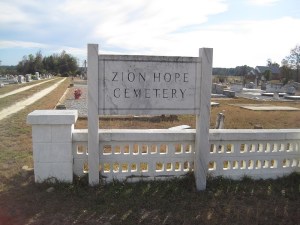
Entrance to Zion Hope Cemetery

I never knew there was a Stephens family plot, especially one in Georgia, until March of 2008.  When my father died, my grandfather suggested we scatter his ashes at the Stephens family plot at the Zion Hope  Baptist Church Cemetery in Crisp County, Georgia, just outside Cordele.  The irony of it all?  My brother who is a Southern Baptist pastor lives nearby and Zion Hope was originally a Methodist Church!

As we walked around the Zion Hope Cemetery that day, I noticed all the headstones with the name Stephens.  My grandfather began to share stories with me.

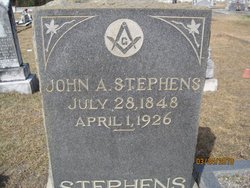
“Here is where my father is buried, Rome O. Stephens,” he said. “He was born January 19, 1880 and he died September 30, 1937 when I was a teenager.”  My grandfather walked my down a little farther, “Over here is your great, great-grandfather, John Anderson Stephens, born 1848 and died 1926. He lied about his age at 15 to join up with the Confederacy because his father was killed in the Civil War at a battle in North Carolina.”  As we walked down some more he said, “And here is his father, Jasper B. Stephens.  Born 1820 and died 1864.  He never made it back home, but they brought his body back to be buried here in the family plot.”

I’m standing in this cemetery, with all of these headstones, hearing all this history and at first it was just information, remembering something that happened in the past. And then, for a brief moment, something transcendent occurred. I’m not going to tell you it was a spirit or spirits…nothing like that.  But for a moment, I was caught in the moment where time and space just seem to cease for a second.  I realize that I am standing among stories that are alive in me. Stories I never really realized, yet they are a part of who I am. I just marveled in the past, the present, and thinking of my girls in the future. I was overwhelmed by it all and I just stood there for a moment in gratitude, humility, awe, and respect.

In a way, this is part of what happens in Holy Communion.

62228718_129090859881

Marker for my great, great grandfather.

In 1 Corinthians 11, Paul talks about the importance of the Lord’s Supper and recounts the words of Jesus when he shared Holy Communion with his disciples.  Jesus said, “Do this in remembrance of me.” But the interesting thing about Jesus’ words, and Paul’s recounting, is that the word “remember” is not really a good translation of the original language.  The word in the Greek is ‘anamnesis’. It has been translated as remembrance, commemoration, and memorial but it means so much more.   In a way, it is remembrance combined with a “living knowledge”…a knowledge of the living presence of the Savior himself as if we were witnesses to his presence.  As James F. White says in his book, Sacraments as God’s Self Giving, “Christ is again present to give himself to us through our re-experiencing his past works.”

We are remembering, but the remembering actually makes Christ present in the now.   Something mysterious happens.  It is the actual presence of grace in Christ.  It is sacramental.  Anamnesis means past events become present; we overcome time for a moment.

When we come and share in Holy Communion, we do much more than remember. We participate again in the event of Christ saving work. May it always be real and present for us.

Unleashing Hope

Pandora’s Box was given to Epimetheus as a gift from the mythological god Zeus.  There was a warning on the box that it never be opened.  One day, while Epimetheus was away, his wife Pandora allowed her curiosity to get the best of her.  Pandora felt the box was a gift from the gods…so why not open it?  As she opened the box, all forms of ghastly forms burst forth unleashing all the evils humanity has ever known.  From then on, life would be different.  Humanity would now toil, grow tired, become sick, and even die – all because Pandora opened the box.  

After all the evil forces escaped, Pandora realized there was one thing remaining in the box.  It was hope.  It wasn’t evil at all.  As a matter of fact, the last thing to come out would be the one thing humanity would need to stand up to all the other ghastly powers.  

We feel that people all around us are unleashing evil and destructive powers.  It feels like Pandora’s Box is being opened every day.  We are confronted with injustice, suffering, pain, despair, exhaustion, war, and death.  Many times we feel like these are the only powers at work in the world.  But God reminds us…there is hope!

I truly believe hope is the one thing we need most in the world…hope in God’s grace that renews and restores.  Just as Pandora’s Box, we watch all the destructive forces fly around us and we wonder, “Is this all there is?”  Then, at the bottom of the box, we notice one more.  Peter and the other disciples noticed it at the bottom of the empty tomb.  Just when it seems the evil powers of the world will win, we discover hope.  Hope is always there and hope never disappoints.

Paul wrote, “suffering produces endurance, endurance produces character, character produces hope…and hope never disappoints.”

I hope you will join me Sunday as we spend time swimming in hope.  Also, if you haven’t been to www.experiencegrowshare.com, I encourage you to visit and find ways to get plugged into worship, education, and mission.

See you Sunday!

John


What Is a Disciple?

What is a disciple? In every church I’ve served, we spent time discussing this question. I wish I could say the answers have all been the same, but different people have different definitions of what a disciple really is. I would also love to say to you right now, “I know the answer and here it is,” but I hate disappoint.

Here is what I do know…we are called to make disciples. In Matthew 28:19-20, we find the ‘Great Commission’. It says, “Go and make disciples of all nations, baptizing them in the name of the Father, Son, and Holy Spirit, and teaching them to obey everything I have commanded you. And remember, I am with you always, to the end of the age.” Matthew is clear that Jesus sends us to make disciples of all nations through baptism and teaching – sacrament and education. For many Christians, that’s it…that’s the list.

But years ago, I read a great book by Mortimer Arias and Alan Johnson called, “The Great Commission: Biblical Models for Evanglism”. In it, they lay out a broader understanding of evangelism and disciple making by looking at the Great Commission from each of the four Gospels (did you know each Gospel has its own Great Commission?). It gives us a broader scope of what disciple making looks like.  (And please don’t judge too harshly if you feel I over-syntesize/simplify Arias/Johnson…)

Matthew’s Great Commission is a focus on Growth. We are called to teach disciples to obey what Jesus has commanded. Mark’s Great Commission is a focus on Proclamation/Preaching. Mark 16:15 says, “Go into the whole world and proclaim the good news to the whole creation.” Luke’s Great Commission is a focus on Jubilee and reconciliation (with God and neighbor). Luke 4:16-30 sets the stage for Jubilee and Luke 24:47 gives the commission, “repentance and forgiveness of sins is to be proclaimed to all nations…” Finally, John’s Great Commission sends us to be the Divine Presence of Christ to the world. In John 20:23, Jesus says, “Peace be with you. As the Father has sent me, so I send you.”

Proclamation, Growth, and the Divine Presence of Christ to the world bringing Jubilee, reconciliation and wholeness to a world in need. Whatever a disciple is supposed to be, these are the core elements.

EXPERIENCE, GROW, SHARE

In keeping with the divine mandate, Chapelwood is fulfilling our mission of making disciples of all nations through experiencing God in worship, growing through education, and sharing through mission.

A disciple’s path should include EXPERIENCING God in worship in one of the Sanctuary, Mercy Street, Esperanza, Upper Room, and Contemplative worship services. Mark’s Great Commission of Proclamation is lived out!

A disciple’s path should include GROWING in knowledge by finding a place to grow in God’s Word. Matthew’s Great Commission of Teaching is lived out!

A disciple’s path should include SHARING our faith by becoming the hands and feet of Christ. We bring Jubilee, reconciliation, and the divine presence of Christ to places where people need hope and healing. Luke and John’s Great Commissions are lived out!

EXPERIENCE, GROW, SHARE

It’s not just an ad campaign. It’s not just a creative email or website. EXPERIENCE, GROW, SHARE is the path of becoming a disciple and making a disciple!

Join us on this journey… and if you are Chapelwood member/attendee, visit, www.experiencegrowshare.com today and get plugged in.

The Image Inside

Stephanie, my wife, and I went to Seagrove Beach, Florida on our one year anniversary in 1994.  One afternoon, we decided to drive down to the center of the cultural world on the Florida panhandle…Panama City Beach.  You can find just about anything you want in PCB.  And everything you want is at Alvin’s.

Alvin’s is a cross between WalMart, Stuckey’s, and the Flora-Bama Lounge.  Alvin’s has alligators, t-shirts, flip-flops, boogie boards and the PCB staple – air brush artists.  Steph and I thought it would be a great idea to capture the moment of our first anniversary with the classic, deep south (I won’t say ‘redneck’ because I’m from South Georgia and that is actually a complement) airbrushed car tag that says “John (hearts) Stephanie”.  The more we thought about the reality of riding around any city with that tag on the front of our car, the more we hesitated.  So we went with Plan B…the cartoon illustrator.

Now, let me make a few comments as I share this image with you.

  • I am opening my soul to you…so be kind.
  • The golf club speaks to my love of golf…the massive cell phone Steph is holding speaks to her job at the time selling cellular phones…in 1994.  That’s why it looks like an early massive Motorola phone from the early 90’s…it actually is.
  • Yes, Steph did have that haircut.
  • Yes, my hair was darker with less gray in 1993.
  • And yes, I still look at Steph that way after 21 years of marriage!

Finally, what strikes me most is the way the illustrator captured our “image”.  I’ve always been amazed at how it really captured the essence of who we were (and are).  In some ways, the image captured in 1994 is still who we are…and in other ways its hard to believe it is us.  I am glad that our “image” was captured and I’m glad I still have this picture.  If you ever want to see the actual picture, stop by my office sometime…it’s hanging on the wall.

Join us Sunday in the Chapelwood sanctuary at 8:25, 9:45, or 11:10 (or stream it live online at www.chapelwood.org) , as I bring the message, “The Image Inside”…


Stephens Cartoon

Cartoon Illustration

Let Us Start This Time Well

It’s finally here.  Seems like an eternity and a blink of an eye all at the same time.  This Sunday, August 3, I will preach my first sermon in the Sanctuary services at Chapelwood United Methodist Church in Houston, Texas.  A few thoughts as I approach this Sunday…

  • I’ve already learned so much about Houston and the Chapelwood community in the past two months.  I still have much to learn, but I am so encouraged by your support and excitement.
  • In the past few weeks, I’ve been meeting with the staff, ministry teams, and others in the community just to get my head wrapped around things as we head into August.  I wish each and every one of you could know EVERY single thing Chapelwood does and dreams to do through your generosity and support.  It is absolutely amazing!
  • I have visited all of our worshiping communities: Mercy Street, Esperanza, Upper Room, and Contemplative in addition to the Sanctuary services.  I’ve even watched services online to get a feel of how it works.  We are blessed with a diverse community.  I truly believe that makes God happy.
  • Every person I’ve met has shared words of excitement and encouragement about us being here.  It warms my heart to know you love my family.
  • This Sunday, I will preach on Mark 4:35-41, “The Calm and The Chaos”.  It will help you know a little more about me and about how God will work in and through us as we move forward into the future.  My desire is that each and every worship service will be a time of true and authentic worship where we experience the living Christ in our midst.
  • August 3 will be a big day in other ways…the shuttles will resume and I hope you will take advantage of them.  I plan to.

As a final thought, let me leave you with our call to worship for August 3.

Let us start this time well, by reminding ourselves:

That we are not here because of our goodness, but because of Christ’s grace,

That we are not here to enlighten ourselves, but to allow Christ to enlighten us,

That we have not come to be entertained, but to worship God with heart, soul, mind and strength.

With overflowing gratitude,

John

Focal Points

Apples

The use of color to create a focal point.

Proverbs 4:25

“Let your eyes look directly forward and your gaze be straight before you.”

In art, a focal point is the element in a painting or a photograph that pulls in the viewer’s eye.  The artist points us to the center of attention or the main subject. The focal point draws you through the picture’s composition, through color, and through the range of tones used.  Artists may use color to help us see the focal point in pictures…such as a single red apple among many green apples.  Other times the photographer may use the aperture of the camera to bring specific items into focus while other items are fuzzy.  And then there are the great artists who are subtle with focal points.  A great example is the painting “Girl with a Pearl Earring” by Dutch painter Johannes Vermeer.  As the name implies, Vermeer uses a pearl earring for a focal point that subtly draws the eye but is not blatantly obvious.

Sunflower

The use of aperture creates a focal point.

God is an artist who works in similar ways.  The Master Artist paints through scripture, tradition, reason and experience.  God gives us some very clear focal points at times – who God is, who we are, and how we are called to work with God in the world.  But God also creates other focal points that are right there in front of us but require a little more spiritual awareness to see.  All of God’s focal points are central identifying ways we understand God and ourselves.  Ultimately, all of God’s focal points point us toward love and grace.

On August 3, 2014, I begin preaching at Chapelwood UMC in Houston, Texas.  Focal Points will be our first sermon series together as we explore the central themes God has for our lives and our ministry together. I am hopeful that focusing on the central tenets of our faith and looking at how God works in the world will lay a solid foundation for our journey together.

Some members of Chapelwood have asked me, “Are you here yet?  Is your family with you?  Are they settling in okay?”  The answer is yes!  We moved to Houston in early June.  I have been hard at work in July spending time with the staff of Chapelwood, experiencing our worshiping communities, surprising a few Bible studies and Sunday school classes, and visiting a few folks.  We are settling into our new home and our girls are making friends and staying busy.  Your prayers and words of excitement and support mean more to us than you can know.  Chapelwood is an amazing community of faith (but I’m sure you already knew that).

Girl With a Pearl Earring

Johannes Fermeer’s, “Girl With a Pearl Earring”

Recently, I visited with a beautiful and encouraging woman named Marty Schroff.  In our visit together, I was so encouraged by her spirit and her joy.  As I was leaving, I asked Marty, “What can I do for you?”  Her answer humbled me. In over 20 years of ministry, I can honestly say no one ever answered that question the way Marty did.  Her response served as the focal point of our time together.  She said, “Just BE, LIVE, and PREACH LOVE!”

I promised her I would…and I promise you I will.

Through the calm and chaos,

John