It’s Okay to Press Pause

At daybreak he departed and went into a deserted place. And the crowds were looking for him; and when they reached him, they wanted to prevent him from leaving them.” – Luke 4:42

At daybreak the next morning, Jesus goes to a solitary place. This is the regular practice of Jesus, highlighted all through the Gospel accounts. I find it fascinating that Jesus does not engage the crowds constantly. There were always needs around him. But he is not in continuous interaction with either his own inner circle or with the masses of people. At significant moments in his life, he withdraws from the press and pull of other people, in order to have time alone in silence and solitude with the Father.

This is an essential part of who he is and an essential part of his life-rhythm. This is his time for prayer, his time for meditation, his time to reflect on the trajectory of his ministry, his time to reconnect in a tangible way with the Father. In these moments, he is reminded of his center, the connection to his Father that anchors his life.

When Jesus, in other places, says “I only do what I see the Father doing” and “I only say what I hear the Father saying,” these are the moments he is referring to. It is only in this kind of silence and solitude that you can truly hear the still, small voice of God. It is only in these moments of meditation and spiritual reflection that you can see what God is doing in the world and then integrate that into your own life.

These moments of pause, when he is not surrounded by people, are essential for Jesus as he steps more fully into his mission and ministry.

The ‘Gospel’: It Means More Than You Think

“Truly I tell you,” he continued, “no prophet is accepted in his hometown. I assure you that there were many widows in Israel in Elijah’s time, when the sky was shut for three and a half years and there was a severe famine throughout the land. Yet Elijah was not sent to any of them, but to a widow in Zarephath in the region of Sidon. And there were many in Israel with leprosy in the time of Elisha the prophet, yet not one of them was cleansed—only Naaman the Syrian.” (Lk. 4:24-27, NIV)

Jesus mentions two stories from the Old Testament that represented an unpopular strand of Jewish tradition. Jews believed that they were the recipients of an exclusive choosing; that is, they believed that God’s choice of Abraham and Sarah, God’s choice of Israel, meant that God did NOT choose anyone else.

Story of the widow of Zarapheth in Sidon is significant that the Hebrew prophet Elijah is sent to a foreigner . . . and perhaps more radical to the audience, that he is sent to a woman.

Elisha is sent to heal the Syrian commander, Naaman, of leprosy. The reign of God extends beyond the borders of Israel, even into the land of Israel’s enemies, the Syrians.

Elijah and Elisha were Hebrew prophets, both Jews who were part of the chosen people. Yet in these two Old Testament stories, it is clear that the chosen people were chosen not to hoard the blessings of God, but to bring the benefits of the one God to all people. The focus is not on Israel and what Israel can receive from God, but on what they can offer to others…how they are to embody the blessing of Yahweh to all the peoples of the world. Elijah and Elisha, two prophets who were committed to God’s covenant with Israel, knew this.

Jesus’ words suggest that the people of Nazareth must come to realize this, also. Their own sense of what it means to be the people of God needs to be transformed. They are not God’s children in order to receive all of God’s blessings merely for themselves. They are God’s children in order to bring blessing to all people of the world. To be chosen by God means to be sent to others…even those outside the circle of inclusion you have drawn.

And this good news is accepted and embraced by the church, right? No. Not even close. The Nazarenes’ appraisal of Jesus changes with the telling of these two stories. They move from amazement to becoming so enraged that they drive him out of town and then seek to kill Jesus.

If we are going to follow Jesus, we have to come to a fundamental understanding of Jesus’ mission as the Son of God. We must also come to a fundamental understanding of God’s heart for the entire world. Because Jesus came for the entire world, as those who follow the path of Jesus, we are called to bring love, peace, blessing, and salvation (wholeness) to the entire world.

A Strange Game: The Only Winning Move is Not to Play

Greetings Professor Falken…

When we follow Jesus, our God-given identity unfolds within us and animates us with purpose and intention for living our days.

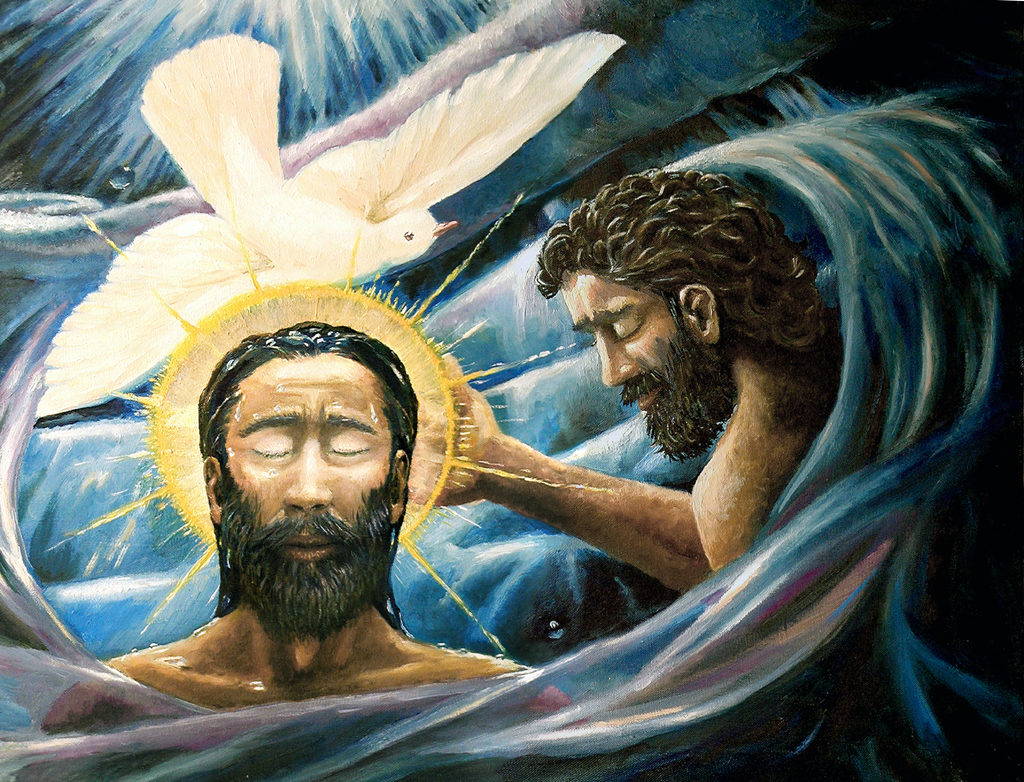
The evil one’s strategy with Jesus in the wilderness intentionally follows the baptism, where in prayer Jesus heard the voice addressing him from the heavens: “You are my beloved Son, in whom I am well pleased” (Lk. 3:22).

The temptations in the wilderness focus on Jesus’ identity. As proposed by Satan, they attempt to lure Jesus with wrong ways of framing what it means for him to be the Son of God. In both Luke’s account and Matthew’s Gospel, two of the three testings begin, “If you are the Son of God…” (Lk. 4:3, 9, NIV). The conditional “if”…Satan’s way of trying to move Jesus away from his core identity, from the center of his personhood.

Philosophy calls what is happening here creating a ‘false dilemma’. It is a near relative of a false dichotomy. A false dilemma is defined as an “informal fallacy based on a premise that erroneously limits what options are available.” This kind of false dilemma says, “If A is true, then B must be true” or “If A is true, then B must happen in this way.” Options are limited to a single course of action or a single result.

Most all of us think and relate to others in this – devilish? – way everyday. We live with this kind of presumptuous thinking that seeks to control and manipulate others into a particular way of acting and being in the world.
• “If you are my friend, you will do this for me.”
• “If you really are a Christian, then you will believe this or that.”
• “If you want to see social change, then you need to align yourself with this or that movement.”
• “If you are a REAL Republican, you’ll vote this way . . . or take this stand on issues.”
• “If you are a REAL Democrat, then these things must be important to you.”

All of this “if-then” thinking limits options…says that there is only one, straight-line way to express your sense of personhood…and tries to force persons into a kind of logic that is false from the beginning. And as I said, those who think and act in this way may not intend it, but they are behaving in a very “devilish” way…for if you do not respond in the way they feel is appropriate in their original “A” statement, then you must not be “A.” (the word for devil in the New Testament means ‘one who divides’)

In the case of Jesus being tested by the evil one in the wilderness, he is told, “If you are the Son of God, then you will act in certain ways.” The evil one tries to limit his options and choices. As far as the devil is concerned, there are no other ways to be the Son of God. And if Jesus chooses other ways to be the Son of God, then the devil can say “see, Jesus is not truly the Son of God.”

The good news is Jesus doesn’t take the bait, and neither should you. You will be confronted with many false dilemmas in our world. Some will be about faith, others politics, and others more personal issues. As long as you are grounded in your divine identity and willing to look deeper beyond the surface of the false dilemmas presented, you will will discover the kind of faith that truly transforms us at every level of life.

Affirming Your True Identity

The Baptism of Jesus

At his baptism, as Jesus was praying, the heavens opened and the Holy Spirit descended on his in bodily form like a dove. And a voice came from heaven: “You are my Son, whom I love; with you I am well pleased.”
 
Jesus’ identity was often challenged throughout his life. In fact, he will move directly from baptism into the wilderness for 40 days of fasting and to be tempted and tested in the desert by the adversary, satan. It is no coincidence that two of the three temptations begin, “IF you are the Son of God,…”
 
Years ago, Maya Lin, the designer of the Vietnam Memorial in Washington, D.C., was interviewed by a TV reporter. The interviewer noted that her remarkable work seemed to have such a strong grip on people . . . that it moved those who visited the memorial with a deeply emotional experience. The reporter asked Maya Lin about why that might be so. She replied, “It’s the names. The names are the memorial. No edifice or structure can bring people to mind as powerfully as their names.”
 
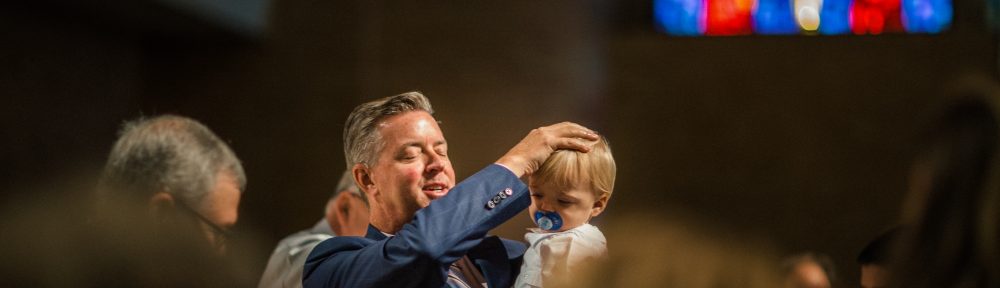
It is important to be named . . . to have a name . . . to know your name . . . to have your deepest, most authentic identity affirmed. Jesus heard that from his Father. We must hear that from God as well in our baptismal identity. “You are my son/daughter, whom I love; with you I am well pleased.”
 
The world and society around us are seeking to deconstruct us everyday and rebuild us into something we were not created to be. I believe that a major part of the Christian spiritual life is about hearing again the name that is foundational to the personhood each of us are invited to live into. We forget who we are. We forget what is fundamental to our personhood. We forget the basic nature of our very DNA. In some sense, Christian spirituality is about remembering, then living more fully into our God-given, God-ordained identity.